
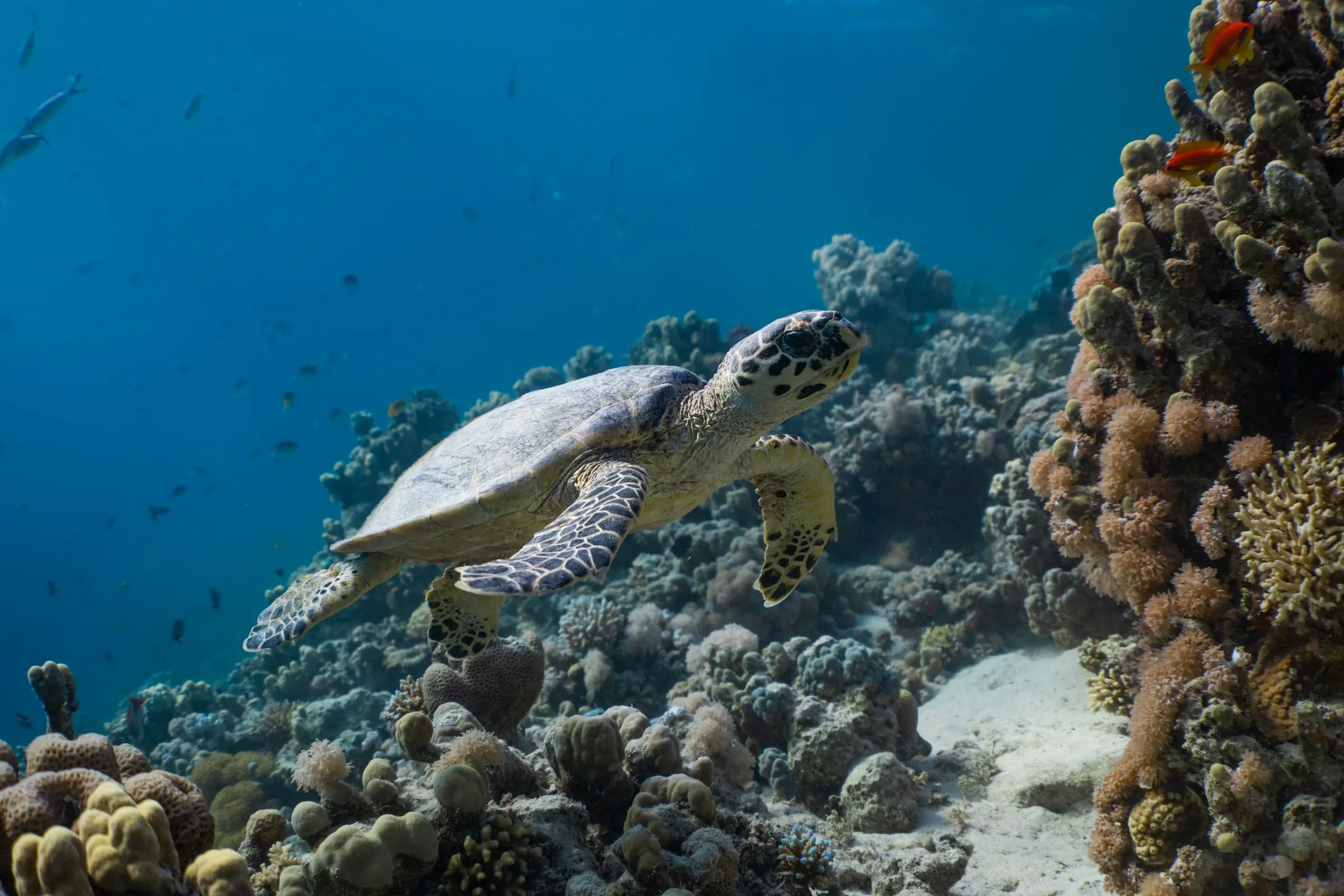
The first invitation is visual: clear water, a turtle crossing the frame, the unexpected shapes of a reef. An image can make us stop. The story becomes more interesting when we ask what sits beyond its edges.
A place people depend on
A reef is also part of a working coast. NOAA describes how healthy coral reefs support fisheries, tourism, and recreation. Those connections reach beyond the water into local businesses and livelihoods. Damage to reef habitat can weaken those relationships as well as the living community beneath the surface.
That is a useful starting point for ocean storytelling. Ask who knows the place, who depends on it, and who is already working there. A local guide and a researcher may notice different things in the same scene. Neither perspective belongs in the background of a story told only through a visitor’s photograph.
The photograph is an opening
Beautiful imagery gives a story its first moment of attention. It cannot establish the health of a whole ecosystem, explain a trend over time, or prove that a conservation project worked. A striking frame and a measured result serve different purposes.
For Ocean Journal, the ambition is to pair that visual invitation with context: the location, the people doing the work, the questions they are investigating, and the limits of what is known. When we use a photograph to illustrate a subject, we should say so. When reporting comes from a specific project, the records and voices should come from that project too.
Follow the story into participation
For a reader, participation can begin with learning about a place and sharing a well-sourced account of it. For a company, the next question is more specific: is there a qualified organization with a useful initiative that the company can support? That conversation should start with local priorities and an agreed scope.
An attractive image is a reason to look closer. A credible program makes the next step understandable: who receives support, what work is planned, and what evidence will be available afterward. Keeping those questions visible lets the beauty of the ocean lead into a more substantial relationship with it.
Keep the connection going.
Join the free network and follow WOL’s stories and participation opportunities.
Join the network free